
PRP for Hair Loss: A Hair Transplant Surgeon’s Guide to Platelet-Rich Plasma Therapy

Updated: Jul 27

PRP for hair loss has become one of the most discussed regenerative treatments in modern hair restoration. Many patients ask whether injecting their own blood-derived growth factors into the scalp can genuinely improve hair growth or whether it is simply another trend promoted online.
The answer requires a more balanced view.
Platelet-Rich Plasma (PRP) therapy can be a valuable treatment option for selected patients with certain types of hair loss, particularly when active hair follicles are still present. However, PRP is not a replacement for a hair transplant and cannot restore follicles that have permanently disappeared. As with any medical treatment, the most important factor is not the treatment itself, but whether it is appropriate for the individual patient.
What Is PRP for Hair Loss?
Platelet-Rich Plasma therapy is a regenerative treatment that uses a patient's own blood to concentrate platelets and growth factors.
During the procedure, a small amount of blood is collected and processed using centrifugation to separate the platelet-rich component from the rest of the blood. This concentrated plasma contains biological signalling molecules involved in tissue repair and regeneration.
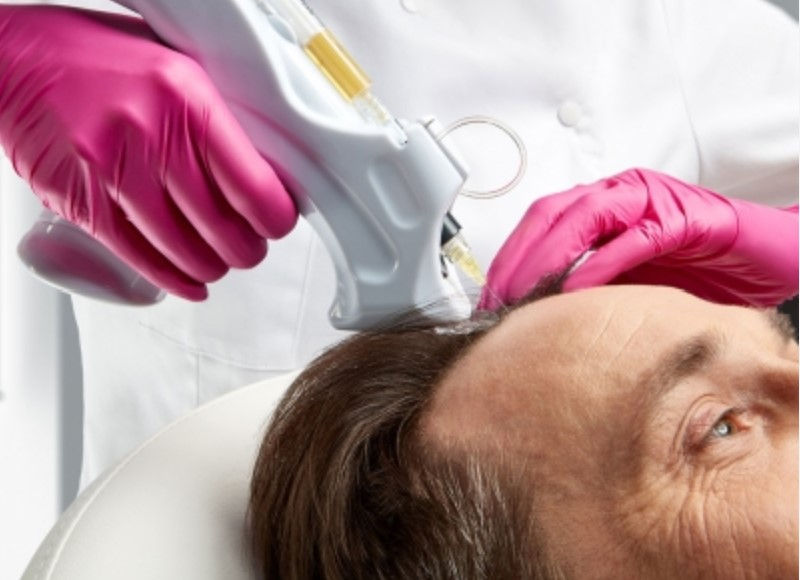
The PRP is then carefully injected into areas of the scalp affected by hair thinning.
The aim is not to create new hair follicles. Instead, PRP is designed to support the function of existing follicles by improving the local scalp environment and encouraging healthier hair growth activity.
How Does PRP Work for Hair Growth?
Hair follicles are living structures that respond to signals from their surrounding environment. In conditions such as androgenetic alopecia, also known as male and female pattern hair loss, follicles gradually become smaller through a process called miniaturisation. The hairs produced become finer and shorter until growth may eventually stop.
PRP contains growth factors that are involved in healing and tissue regeneration. These include signalling molecules associated with blood vessel formation, collagen production, and cellular repair. When injected into the scalp, PRP may help improve communication between cells around the follicle and create a more supportive environment for weakened follicles. The effectiveness of treatment depends on whether the follicle is still capable of responding. A follicle that has completely disappeared cannot be regenerated by PRP.
What Does the Evidence Show?
Research into PRP for hair loss has increased significantly over recent years, with studies investigating its role in androgenetic alopecia. Many studies report improvements in parameters such as hair density, hair thickness, and patient satisfaction, particularly in individuals with early to moderate hair thinning.
However, results are not identical for everyone.
Factors that influence outcomes include:
The underlying cause of hair loss
The stage of follicular miniaturisation
The quality and concentration of the PRP preparation
The patient's overall health and scalp condition
Whether PRP is combined with other appropriate treatments
This is why PRP should be viewed as part of a personalised hair restoration plan rather than a universal solution.
Who May Benefit From PRP Hair Treatment?
PRP may be considered for patients with:
Early male pattern hair loss
Female pattern hair loss
Diffuse thinning where follicles remain active
Patients looking to improve the quality of existing hair
Selected patients before or after hair transplant surgery
However, not every type of hair loss responds to PRP.
Patients with advanced baldness, complete follicular loss, untreated inflammatory scalp conditions, or certain forms of scarring alopecia may require different treatment approaches. A proper diagnosis should always come before treatment.
Can PRP Regrow Completely Lost Hair?
This is one of the most important questions patients ask.
The honest answer is no. PRP cannot recreate a hair follicle where it no longer exists. For patients with areas of permanent baldness, hair transplantation remains the only treatment that can physically introduce new follicles into those areas. Where PRP can be valuable is in supporting follicles that are weakened but still biologically active. This distinction is important because realistic expectations are a key part of successful hair restoration.
PRP Versus Hair Transplantation: Understanding the Difference
PRP and hair transplantation are often discussed together, but they serve different purposes. A hair transplant involves transferring healthy follicles from a donor area to areas where hair has been permanently lost. PRP is a regenerative treatment that aims to improve the condition of existing follicles. Some patients may benefit from PRP alone, while others may require a combination approach depending on their pattern and severity of hair loss.
What Happens During a PRP Hair Treatment?
Before treatment, the scalp should be assessed to determine whether PRP is suitable.
During the procedure, a small blood sample is collected and processed to separate the platelet-rich plasma. The concentrated PRP is then injected into targeted areas of the scalp using a controlled technique. The procedure is usually performed without local anaesthetic or with measures to improve comfort. Temporary redness, tenderness, mild swelling, or sensitivity may occur afterwards. These effects usually settle within a short period.
Questions I Am Frequently Asked in Clinic
Is PRP painful?
Most patients tolerate PRP well. The scalp can be sensitive, but discomfort is usually manageable. Local anaesthetic measures may be used depending on the treatment approach and patient preference.
How many PRP sessions are needed for hair loss?
The number of treatments depends on the patient's diagnosis, degree of thinning, and treatment goals. Hair growth is a slow biological process, so PRP should not be judged immediately after one session. Improvement is usually assessed over several months rather than days or weeks.
How long do PRP hair results last?
PRP does not permanently change the genetic tendency responsible for pattern hair loss. Some patients benefit from maintenance treatments, while others may require combination therapy to maintain improvements. The long-term plan depends on the individual's condition.
Is PRP better than minoxidil?
PRP and minoxidil work in different ways.
Minoxidil is a medication that influences the hair growth cycle, while PRP uses concentrated growth factors derived from the patient's own blood. In some cases, they may complement each other rather than compete.
Can PRP damage hair follicles?
When performed correctly by trained medical professionals, PRP is generally considered a safe treatment because it uses the patient's own blood components.
However, correct patient selection, sterile technique, and appropriate injection methods are essential.
My Approach as a Hair Transplant Surgeon
In my practice, I often explain to patients that PRP is not about finding a single treatment that works for everyone. The first step is always understanding the cause of hair loss. A detailed assessment includes the pattern of thinning, scalp condition, follicular activity, medical history, previous treatments, and patient expectations. Only then can we determine whether PRP is likely to provide meaningful benefit. The best outcomes in hair restoration come from matching the right treatment to the right patient at the right stage of hair loss.
Final Thoughts
PRP for hair loss is an important development in regenerative hair medicine and can be a useful option for carefully selected patients. It is not a miracle cure, and it cannot replace a hair transplant when follicles have been permanently lost. However, when used appropriately, PRP may help support weakened follicles and improve the quality of existing hair. Successful hair restoration is based on accurate diagnosis, evidence-based treatment selection, and realistic expectations.
Written by
Dr Feyroza Mustaeva, MD, MSc, Hair Transplant Surgeon
Related articles
Ser our before an after PRP results


Comments