
Microneedling for Hair Loss: A Hair Transplant Surgeon’s Guide

Updated: Jul 27
Microneedling for hair loss has gained significant attention in recent years, but does it really improve hair growth?
This is one of the questions I frequently discuss with patients during hair restoration consultations. The answer is not simply yes or no. Microneedling can be a useful treatment for selected patients, particularly those with early-stage hair thinning where hair follicles are still active. However, it is not a universal solution for every type of hair loss, and it cannot replace treatments that address the underlying cause.
As with any hair restoration treatment, the most important step is understanding why the hair loss is occurring before deciding which treatment is appropriate.
What Is Microneedling for Hair Loss?
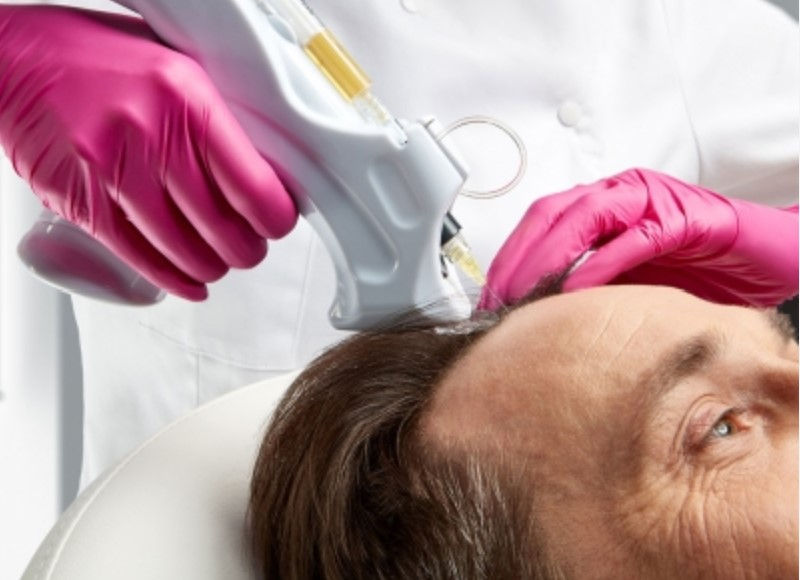
Microneedling is a minimally invasive procedure that uses fine sterile needles to create controlled micro-injuries within the scalp. These tiny channels stimulate the body's natural repair response. The process encourages the release of growth factors, improves local blood circulation, stimulates collagen production, and may help create a more favourable environment around existing hair follicles.
The aim of microneedling is not to create new follicles. Once a follicle has permanently disappeared, no topical treatment or regenerative procedure can recreate it. Instead, microneedling works by supporting follicles that have become weakened or miniaturised but are still capable of producing hair.

How Does Microneedling Stimulate Hair Growth?
Hair follicles are constantly cycling through growth, transition, and resting phases. In conditions such as androgenetic alopecia, also known as male or female pattern
hair loss, susceptible follicles gradually become smaller and produce finer hairs.
Microneedling appears to influence several biological mechanisms involved in this process. The controlled injury stimulates growth factors involved in tissue repair, improves communication between skin cells, and may activate regenerative pathways within the follicle environment.
Research has shown that microneedling may enhance the response to treatments such as topical minoxidil. However, the results depend greatly on the individual patient, the stage of hair loss, and whether the correct diagnosis has been made.
Can Microneedling Regrow Lost Hair?
This is one of the most common questions patients ask. The honest answer is that microneedling cannot regrow hair where follicles have been permanently lost. It is not a replacement for a hair transplant in areas of advanced baldness. However, in patients with early thinning, miniaturised follicles may still have the ability to produce thicker and healthier hair. In these situations, microneedling may become part of a wider treatment strategy alongside medical therapies, PRP, or other regenerative approaches.
The key factor is identifying whether the follicles are still biologically active.
Who May Benefit From Scalp Microneedling?
Microneedling may be considered for patients with:
Early male pattern hair loss
Female pattern hair loss with preserved follicular activity
Diffuse thinning where follicles are still present
Patients looking to optimise scalp health alongside other treatments
However, not every patient experiencing hair loss is a suitable candidate.
A patient with scarring alopecia, active scalp inflammation, infection, or untreated medical causes of hair loss may require a completely different approach. This is why assessment should come before treatment.
Professional Microneedling Versus Home Dermarollers

Many patients ask whether they can simply purchase a dermaroller online and achieve the same results. Home devices are widely available, but they should not be considered equivalent to medical treatment. In a clinical setting, the scalp is assessed before treatment, the device is sterile, and the approach is tailored according to the patient's diagnosis and scalp condition. Needle depth and treatment frequency are selected carefully because more aggressive treatment does not automatically mean better results.

One of the most common mistakes I see
with home microneedling is the belief that deeper needles and more frequent sessions will accelerate hair growth. In reality, excessive trauma can increase irritation and inflammation without improving outcomes.
Questions I Am Frequently Asked in Clinic
Does microneedling hurt?
Most patients describe the procedure as uncomfortable rather than painful. The level of sensation depends on the treatment depth and individual sensitivity. A topical anaesthetic can be used when appropriate. After treatment, mild redness and scalp sensitivity are expected and usually settle within a short period.
How often should microneedling be performed for hair loss?
Treatment intervals depend on the patient's scalp condition and the depth of treatment being performed. The scalp requires time to complete its healing response, so repeated treatment too frequently may be counterproductive.
Can microneedling damage a hair transplant?
Timing is important. After a hair transplant, newly implanted grafts require time to establish themselves within the scalp. Performing microneedling too early could interfere with healing. Patients should always follow the advice of their hair transplant surgeon before introducing any scalp stimulation treatment after surgery.
Is microneedling better than PRP for hair loss?
Microneedling and PRP work through different mechanisms and are not necessarily competing treatments.
Microneedling stimulates the scalp through controlled mechanical stimulation, while PRP uses concentrated growth factors derived from the patient's own blood. In selected patients, combining approaches may provide additional benefit.
Why did microneedling not work for me?
A lack of improvement does not always mean the treatment failed. It may indicate that the underlying cause of hair loss has not been addressed or that the follicles are no longer capable of responding. Hair restoration is highly individual. The same treatment can produce different outcomes depending on genetics, hormonal factors, scalp health, and the stage of hair loss.
My Approach as a Hair Transplant Surgeon
In my practice, I do not recommend treatments based purely on popularity or online trends. The first step is always diagnosis. During consultation, I assess the pattern of hair loss, scalp condition, follicular activity, previous treatments, and the patient's expectations. Only after understanding these factors can we decide whether microneedling is likely to provide meaningful benefit. The best results in hair restoration usually come from combining the right treatment with the right patient at the right stage of hair loss.
Final Thoughts
Microneedling can be a valuable addition to modern hair restoration when used appropriately. It is supported by growing scientific evidence and may improve the quality of existing hair in suitable patients. However, it is not a miracle treatment and should not be viewed as a replacement for diagnosis or established hair restoration procedures. Successful hair restoration begins with understanding the cause of hair loss and creating a personalised treatment plan based on evidence, experience, and realistic expectations.
Written by
Dr Feyroza Mustaeva, MD, MSc, Hair Transplant Surgeon
Related articles
Comments