
The Complete Medical Preparation Guide Before Hair Transplant Surgery: Why Diagnosis, Optimisation and Long-Term Planning Determine Success.

Updated: Aug 5
As demand for hair transplantation continues to grow internationally, many patients are attracted by package-based treatment models that combine consultation, surgery and travel within a matter of days. While this approach may be convenient, it can inevitably limit the time available for comprehensive diagnosis, medical optimisation and long-term treatment planning.
Hair restoration is not simply about implanting follicles; it begins with understanding why hair loss has occurred and whether surgery is the most appropriate treatment at that stage.
When most people think about a hair transplant, they focus on the surgery itself—how many grafts they need, how their new hairline will look or how quickly they can return to work. In reality, the operation is only one part of successful hair restoration. The quality of the final result is often determined long before the first graft is harvested.
Hair transplantation is not a cure for hair loss. It is a surgical treatment for patients with stable hair loss, most commonly androgenetic alopecia (male and female pattern hair loss).
While the procedure redistributes healthy follicles into thinning or bald areas, it does not stop the biological process responsible for ongoing hair loss. Unless that process is recognised and appropriately managed, patients may continue losing their existing hair around the transplant, gradually affecting the overall appearance over time. For this reason, responsible hair restoration begins with a thorough medical assessment rather than a surgery date.
Looking Beyond the Hair Loss
The first consultation is not simply about deciding whether someone wants a transplant. It is about understanding why the hair has been lost in the first place.
Although androgenetic alopecia is the most common diagnosis, not every patient has genetic hair loss. Conditions such as iron deficiency, thyroid disorders, vitamin deficiencies, autoimmune diseases, traction alopecia, inflammatory scalp disorders and certain medications can all contribute to hair shedding or thinning. Some of these conditions are temporary and reversible, while others require medical treatment before surgery can even be considered.
Treating the visible thinning without identifying the underlying cause is similar to repainting a wall without repairing the damp behind it. The cosmetic improvement may initially look successful, but the underlying problem continues to progress.
Medical Preparation Before Hair Transplant: A Detailed Medical Assessment
A comprehensive consultation should explore far more than the scalp alone. Medical history often provides valuable clues that influence both diagnosis and treatment.
Recent rapid hair loss, significant weight loss, pregnancy, chronic stress, hormonal disorders, diabetes, smoking, previous hair transplants, scalp infections, family history and current medications all help build a complete clinical picture. In some patients, blood tests may also be appropriate to investigate potentially reversible causes of hair loss.
Depending on the individual, these may include assessment of iron stores (ferritin), thyroid function, vitamin B12, vitamin D or other investigations guided by the patient's history and symptoms.
These tests are not performed routinely for everyone, but when clinically indicated they help identify conditions that should be treated before surgery rather than overlooked.
Correcting an iron deficiency, improving thyroid function or treating nutritional deficiencies will not reverse advanced male pattern baldness. However, addressing these problems can reduce excessive shedding, improve the quality of existing hair and provide a much more stable foundation before transplantation.
Why Trichoscopy Has Become an Essential Part of Modern Hair Restoration
A careful visual examination is important, but it does not always reveal the full picture.
Trichoscopy allows the scalp and hair follicles to be examined under magnification, providing information that cannot be appreciated with the naked eye. It helps assess follicular miniaturisation, hair shaft thickness, follicular unit density, donor quality and early signs of scalp inflammation or scarring. This information frequently changes the treatment plan.
A donor area that appears healthy during routine examination may already show widespread miniaturisation under trichoscopy, suggesting that the donor hair itself is becoming affected by androgenetic alopecia. Harvesting aggressively from an unstable donor area may permanently reduce donor density and compromise future treatment options.
Likewise, evidence of inflammatory scalp disease may indicate that surgery should be postponed until the condition has been medically controlled, helping to maximise graft survival and reduce the risk of poor outcomes. Trichoscopy is therefore not simply another piece of equipment—it is a valuable diagnostic tool that supports safer surgical planning.
Why Medical Treatment Should Often Come Before Surgery
One of the most common misconceptions is that surgery replaces medical treatment. In reality, the opposite is often true. Medical therapy aims to preserve the patient's existing hair, while surgery restores hair that has already been permanently lost. The two approaches complement each other.
Dihydrotestosterone (DHT) gradually causes genetically susceptible follicles to become smaller with each growth cycle. As these follicles miniaturise, the hair becomes progressively finer until growth eventually stops altogether. Medications such as finasteride and dutasteride reduce the effect of DHT and are supported by strong clinical evidence for slowing disease progression in appropriately selected patients. By preserving existing hair, these treatments can improve long-term transplant outcomes and reduce the likelihood of future surgery.
Minoxidil, available as a topical solution or oral medication in selected patients, works differently. Rather than blocking DHT, it stimulates follicles to remain in the active growth phase for longer, increasing hair shaft thickness and improving the appearance of partially miniaturised hairs. Many patients experience an improvement in hair density before surgery, sometimes reducing the number of grafts required to achieve their desired result.
Medical treatment is not suitable for every patient and should always be discussed individually.
However, beginning evidence-based therapy before transplantation often allows surgery to be planned more conservatively while preserving valuable donor hair for the future.
In clinical practice, it is not uncommon to meet patients who have been advised to proceed directly to surgery without a detailed assessment of disease progression, donor stability or the potential benefits of medical treatment. In some cases, appropriate medical therapy may improve existing hair density, reduce ongoing miniaturisation and allow surgery to be planned more conservatively. In others, it may reveal that surgery should be postponed until the underlying condition has stabilised.

Preparing the Scalp for Surgery
Successful surgery depends not only on healthy grafts but also on a healthy scalp.
Active dandruff, seborrhoeic dermatitis, psoriasis, folliculitis or inflammatory scalp disease should be recognised and treated before transplantation. Chronic inflammation may affect wound healing and the environment into which new grafts are placed. Similarly, smoking, poorly controlled diabetes and certain medical conditions may impair blood circulation and delay healing, making optimisation before surgery an important part of patient care.
Good preparation is not about delaying treatment unnecessarily. It is about creating the best possible conditions for transplanted follicles to survive and thrive.
Why Waiting Can Sometimes Produce Better Results
Patients are often surprised when advised to postpone surgery for several months. However, waiting is not always a setback. Allowing medical treatment time to stabilise hair loss frequently improves existing hair density, makes the pattern of hair loss more predictable and enables a more accurate estimate of the number of grafts truly required. In some cases, patients discover that medical treatment alone provides sufficient improvement to delay surgery altogether.
When surgery is eventually performed, it is undertaken on a more stable scalp, with a clearer long-term plan and a greater opportunity to preserve the finite donor supply.
Hair Transplantation Is a Long-Term Partnership
A successful hair transplant does not end when the dressings are removed.
Hair growth continues over the following twelve to eighteen months, while androgenetic alopecia remains an ongoing condition that requires monitoring.
Follow-up appointments allow assessment of graft growth, review of medical treatment, identification of any concerns and adjustment of the long-term management plan where necessary.
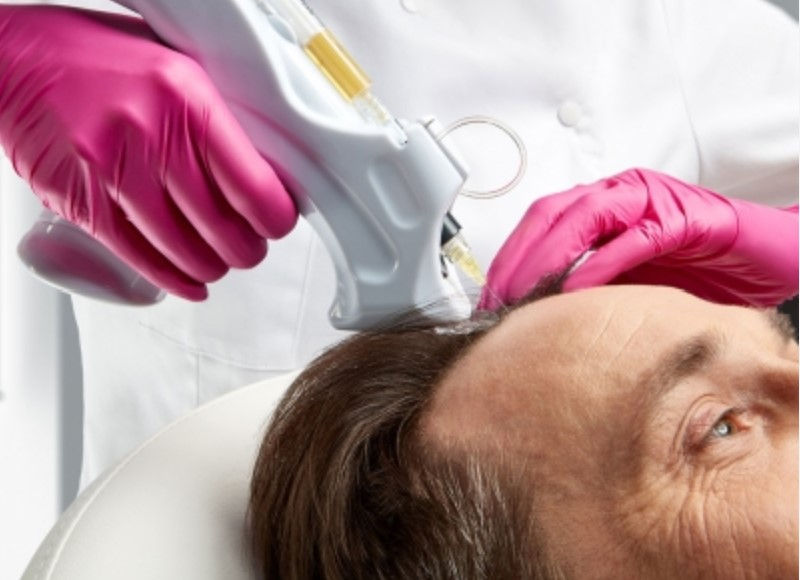
Supportive therapy. In selected patients, additional treatments such as platelet-rich plasma (PRP) may be recommended as part of a personalised programme, although current evidence suggests PRP should be considered an adjunct rather than a replacement for established medical therapy.
Continuity of care is one of the most important yet often overlooked aspects of hair restoration. Patients should know who will continue managing their condition after surgery, rather than viewing transplantation as a single event.
Choosing a Clinic Means Choosing a Treatment Philosophy
When comparing clinics, it is easy to focus on price, graft numbers or before-and-after photographs. These are important considerations, but they should never replace careful medical assessment.
Patients should feel confident asking important questions before committing to surgery:
Will my diagnosis be confirmed before treatment?
Will my donor area be assessed with trichoscopy?
Do I need medical treatment before surgery?
Is my hair loss stable?
How will my hair be managed five or ten years from now?
The answers to these questions often reveal far more about the quality of care than the advertised cost of a procedure.
Conclusion
Hair transplantation is one of the most rewarding procedures in modern aesthetic medicine when performed for the right patient, at the right time and for the right reasons.
The operation itself is only one stage of a much longer journey that begins with accurate diagnosis, careful medical assessment and evidence-based optimisation of both the patient and the scalp.
When choosing a hair transplant clinic, patients should look beyond graft numbers, package prices and before-and-after photographs. They should ask whether the consultation includes a comprehensive medical history, scalp examination, trichoscopic assessment, discussion of evidence-based medical treatment and a long-term management plan. These elements may appear less visible than the operation itself, yet they are often the factors that determine whether a transplant continues to look natural many years later. Hair restoration should never end on the day of surgery; it should begin with careful diagnosis and continue with ongoing clinical care.
The most natural and long-lasting results are rarely achieved by rushing to surgery. They are achieved by understanding that hair loss is a medical condition first and a surgical condition second. When diagnosis, medical treatment and long-term planning are given the same importance as the operation itself, patients are far more likely to achieve results that remain healthy, natural and sustainable for many years to come.
The most successful outcomes are achieved when surgery is performed at the right time, for the right indication and as part of a long-term treatment strategy. Patients should never feel rushed into an operation before understanding the cause of their hair loss, the health of their donor area or the role that medical treatment may play in protecting their future hair. Choosing a clinic that places diagnosis before surgery is not simply a different approach, it is an investment in the longevity of your result.
Written by
Dr Feyroza Mustaeva, MD, MSc
Hair Transplant Surgeon
Professional Master's Degree in Hair Transplantation & Aesthetic Medicine


Comments